
In the competitive landscape of e-commerce, the effectiveness of a PDP is pivotal to driving consumer trust and maximising conversion rates. The PDP serves as the critical touchpoint where potential buyers evaluate product offerings and decide whether to complete a purchase. This case study examines the redesign of a PDP with the intent to create a page that is modern, trustworthy, and conversion-focused, while simultaneously upholding a clean and minimalistic aesthetic. The primary challenge addressed was balancing these objectives to enhance user engagement and purchase intent without compromising visual clarity or ease of use.
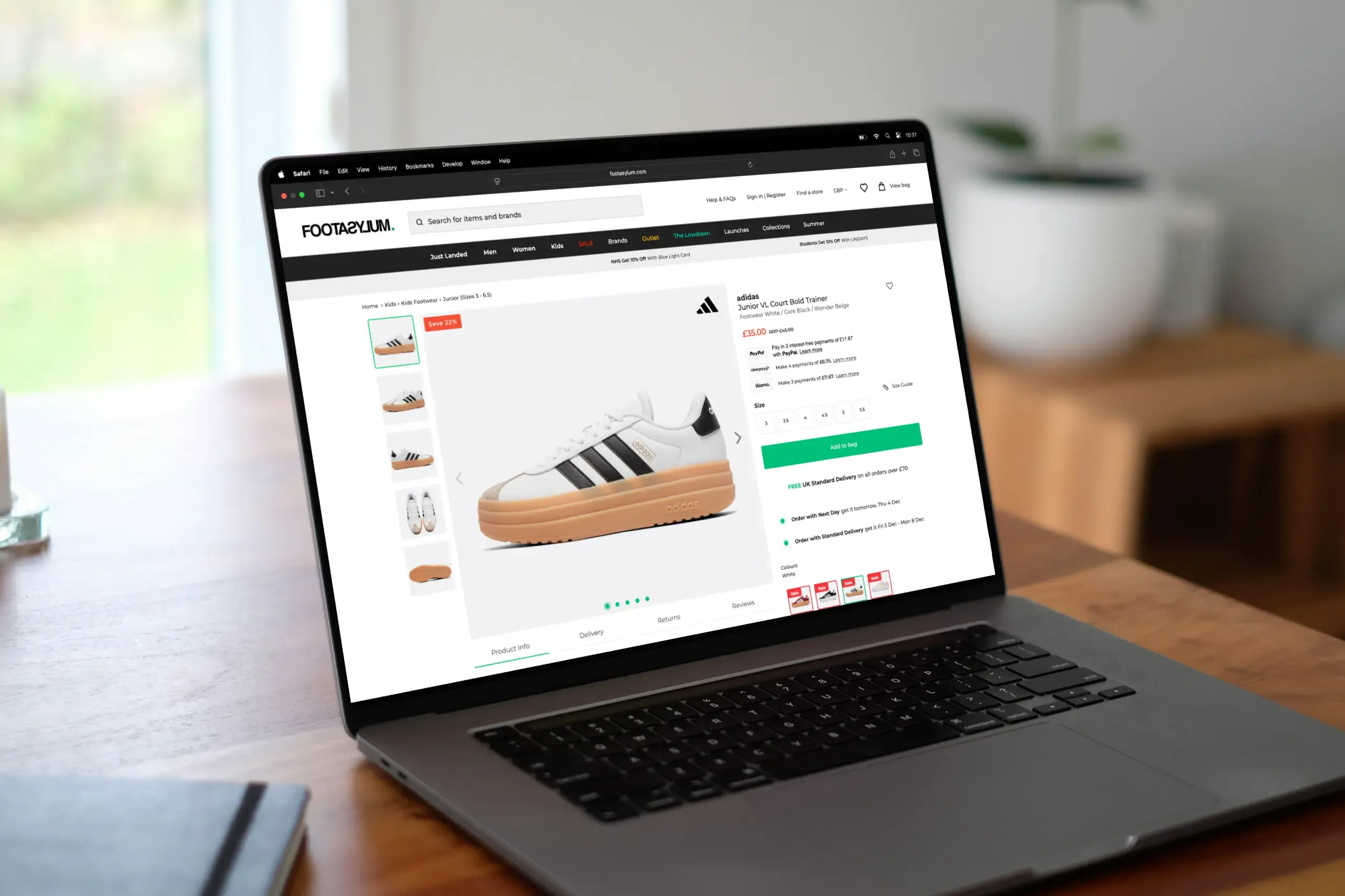
The redesign project centred on developing a PDP layout that leverages a strong visual hierarchy to guide user attention efficiently. By prioritising key product information and actionable elements, the page fosters an intuitive browsing experience. Interaction patterns were carefully designed to be straightforward and familiar, minimising cognitive load and streamlining user decision-making processes.
A notable aspect of the redesign was the adoption of a media-first approach, wherein high-quality images and multimedia are prominently featured. This aligns with best-in-class e-commerce standards, which emphasise rich visual content to promote product transparency and enhance user trust. The media-first strategy not only enriches the visual appeal but also caters to a user preference for detailed product visualisation before purchase.
The minimal aesthetic supports clarity and focus by reducing visual noise and distractions. This design choice complements the conversion-centric goals by enabling users to navigate the page naturally and make confident purchase decisions. The approach aligns with common principles in user experience (UX) research, which advocate for simplicity and clarity as drivers of effective online retail interfaces.
Throughout the redesign process, iterative testing and feedback were employed to refine the layout and interactions. Key performance indicators such as user engagement, time on page, and conversion rates were monitored to assess the impact of design decisions. This data-driven approach ensured that the final design not only met aesthetic and usability goals but also delivered measurable business outcomes.


Outcome
The PDP redesign successfully achieved its goals by integrating a modern and trustworthy feel with a strong focus on conversion, all within a clean and minimalistic framework. The strategic use of visual hierarchy, intuitive interaction patterns, and a media-first presentation resulted in an enhanced user experience that aligns with contemporary e-commerce best practices.
The new design achieved an increased Add To Cart rate of +7.3% and Revenue Per Session increase of +3.5%.

